Nowstalgia and why we don’t really miss the past

We don’t yearn for the past. We yearn for the now.
Call it Nowstalgia. It’s an urban term that’s been little used, but I’m going to push it.
In a moment I’ll write about how we design solutions for affection, not just for function. But first, let me take you on a little journey.
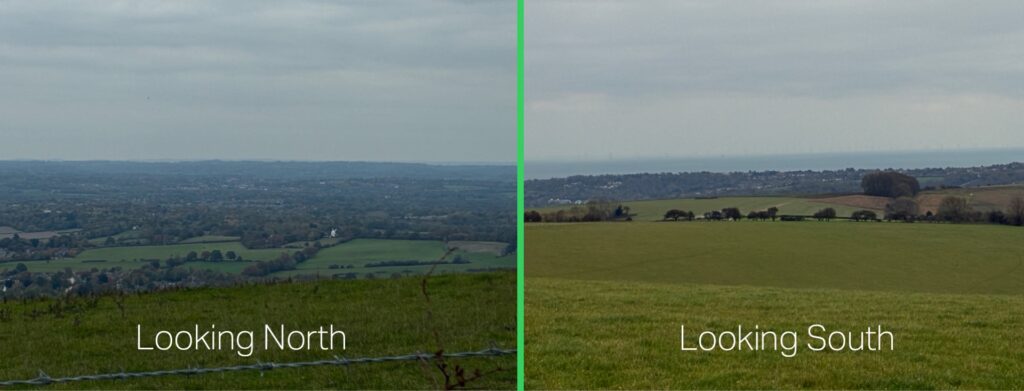
Yesterday I walked the South Downs Way from my home in West Sussex to Lewes. To the north, the Weald rolled away in fields, villages and church spires. If you look carefully in the picture on the left you’ll see a white dot – possibly Oldland Windmill. To the south lay the English Channel. And out there, 13 kilometres offshore and far too faint for my phone camera, stood the 116 turbines of the Rampion wind farm.
Windmills.
Two hundred years ago, this view would have been full of them – but to the north. Sussex had many hundreds, grinding the county’s grain. Windmills weren’t scenery. They were industry.
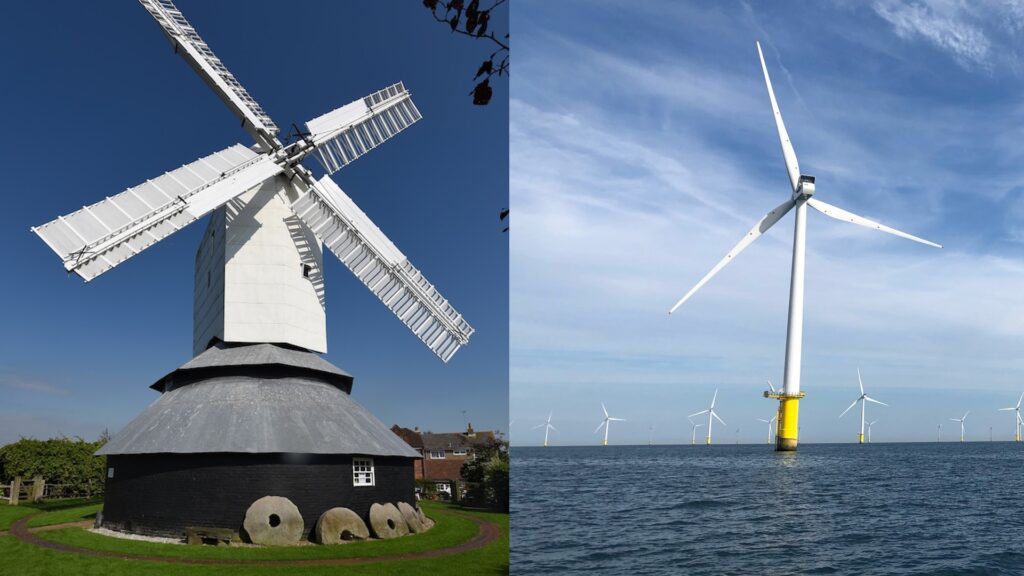
Today the survivors, like Jack and Jill above Clayton near my home, are treasured. There are around 100 left. We visit them. We put them on postcards and tea towels and sigh for a gentler age. We are delighted when another is saved.
Yet if a developer proposes a wind farm within sight of someone’s back garden, watch the village hall fill up. If windmills were so wonderful then, why are they so unwelcome now?
We say we want the past
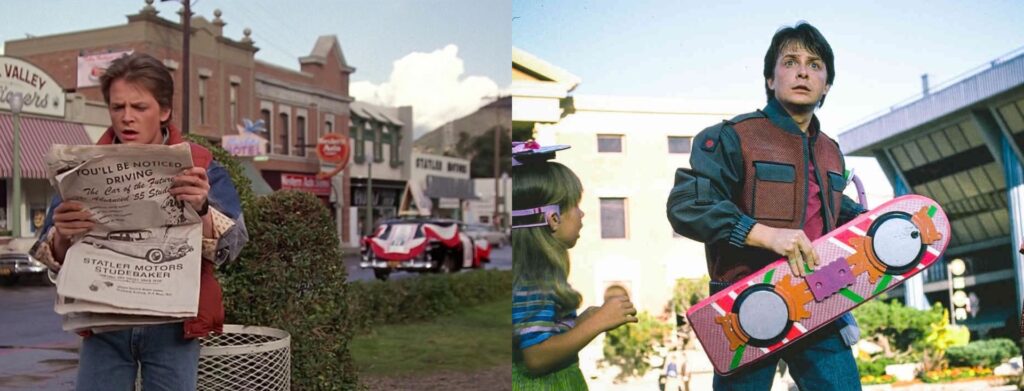
Ask the British, and the past wins. Other nations may be the same. On 21 October 2015, the day Marty McFly lands in the future in Back to the Future Part II, YouGov asked people which way they’d travel in time. 53% chose backwards. Just 25% chose forwards.
But look closer at the same poll. Among those who’d seen the film, 48% preferred the real 2015 to the fictional one. Only 29% wanted the hoverboards.
How many of us want the house robots of the future promised by AI? The flying cars?
Marty is probably the patron saint of nowstalgia. Stranded in 1955, he spends the whole film trying to escape. Catapulted to 2015, he finds it just as unsettling. What he wants is 1985. His own present.
The science of staying put
Behavioural science has a name for most of this.
- Status quo bias. Given a choice, we stick with what we have, even when the alternative is better.
- Loss aversion. Losses loom larger than equivalent gains. Daniel Kahneman nailed this. Change usually asks us to give something up first.
- Rosy retrospection. We remember events more fondly than we felt them at the time. The past we want to go back to never quite existed.
We love the past when it’s fun and free: 80s playlists, retro games, a vintage jacket. We don’t want its cold houses, short lives and outside loos. What we really want is for now to stay put.
Design solutions for affection, not just function
Here’s the uncomfortable bit for designers and strategists. Next to a beautiful Sussex smock mill, a modern turbine can appear to be a bloody ugly thing.
Familiarity softens most things. Parisian artists petitioned against the Eiffel Tower in 1887. But design can speed the process up.
What if business was to treat the most functional things it builds as brand assets? Can you make a nuclear power station look cute? Or a data centre feel welcoming? A substation look like it belongs?
There is a reason the glass pyramid at the entrance to the Louvre looks so in keeping: It’s a Pyramid. We have done this before. But like the Eiffel Tower, it too was derided on its arrival – people had to learn to love it.
Three ways to put nowstalgia to work
For brands and even governments seeking to change behaviours and mindsets we can learn from this. We can learn to tell a story about the future that draws upon the past.
For B2B brands asking customers, partners or employees to change, the lesson is clear. Don’t sell the future against the present. Build the future out of it.
- Borrow confidence from the past. Show people what earlier generations achieved in the name of progress. Sussex millers harnessed the wind two centuries ago. We can do it again, better.
- Praise the present. Don’t tell people today is broken. Tell them what’s working and how you’ll build on it. Nobody changes faster for being told they’re failing.
- Honour the journey. Recognise how far people have already come and what they achieved getting here. It’s proof they can change. Alastair Campbell has a word for it: persevilience.
It is a simple human truth that people don’t fear change. They fear loss. Frame change as keeping the best of now, and the future becomes a much easier sell.
Nowstalgia is a thing. Use it.