Emotional storytelling increases brand effectiveness
A few weeks ago I wrote about the gap between what people intend to do and what they actually do, and how behavioural science can help close it. This time I want to talk about something that sits upstream of all of that. Before you can change behaviour, you need people to feel something. And that starts with a story.
Every effective brand story starts with a feeling, not a feature. That’s why, at The Team, we keep coming back to the idea of the simple human truth – the one thing a person really wants from you and will compel them to act, beyond the product, the promotion or the platform.
Setting up the simple human truth
If you’ve read my pieces on behaviour change or brand authenticity, you’ll know I care about rigour and honesty in how brands show up. At The Team, we defer to three principles in almost every piece of work we do: rigour, clarity and the simple human truth. Rigour is about putting evidence before instinct. Clarity is about saying one thing well, rather than everything at once. The simple human truth is the single, honest human insight that sits at the heart of any story worth telling.
It doesn’t matter what you sell or who you’re selling to. There is always an emotional story beneath the rational one. Our job as marketers is to find it, then build everything else around it.
From attractions to outcomes: Southeastern Railway
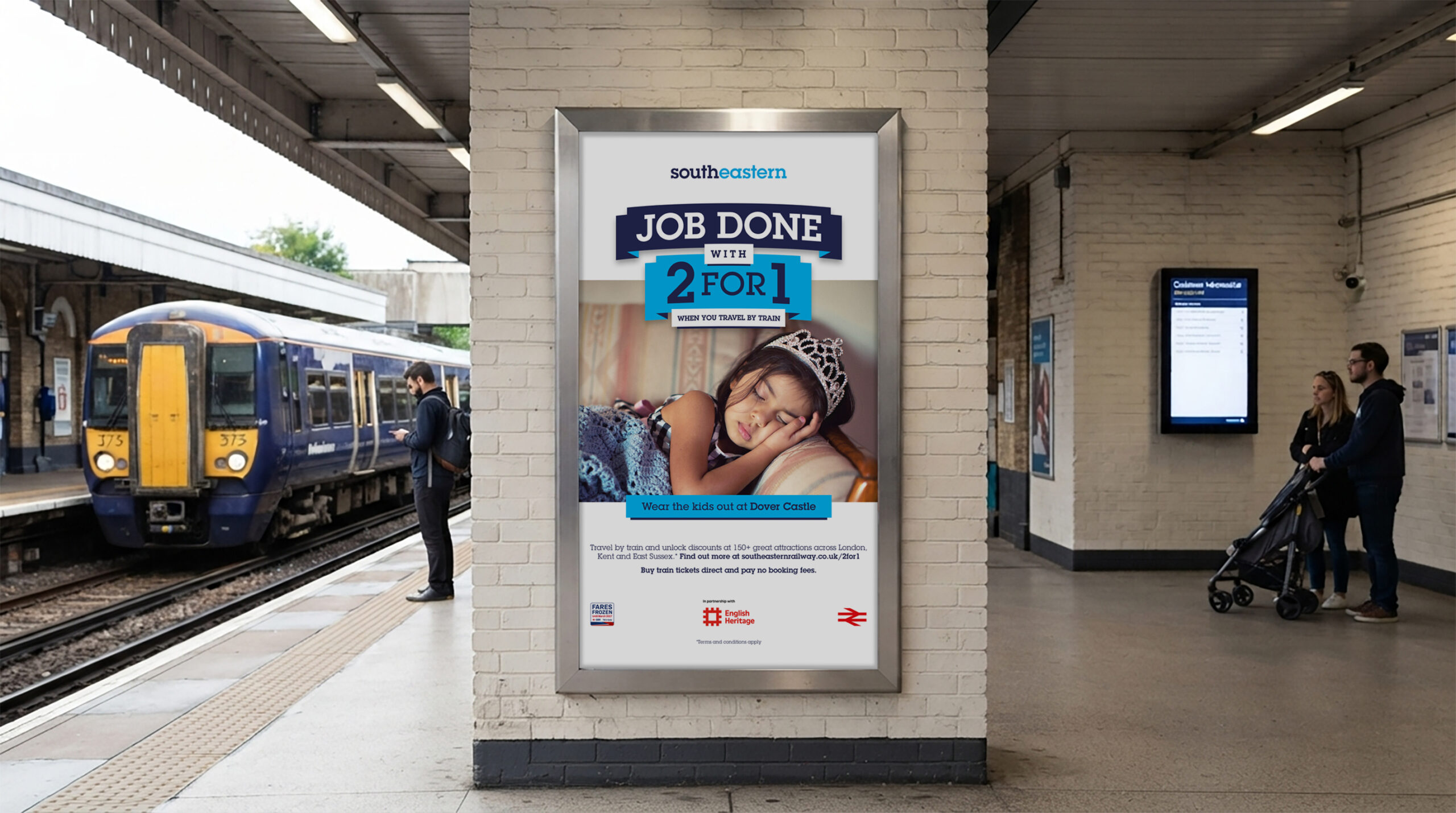
We’ve just launched a campaign for Southeastern Railway, one of a number of “241” promotions that train operating companies run each year – buy a ticket to travel and get two-for-one, or take a third off, entry to various attractions, in this case across London and the south east. Historically, many have approached this in a similar way: they showcase the variety of attractions with a carousel of options such as theme parks, zoos, castles, seaside towns and let the choice and offer do the talking. It’s logical, but it’s also cognitively busy. A wall of options creates parity, not preference.
For this campaign, we asked a different question. Not ‘where could you go?’ but ‘how will you feel when you get home after a great day out? For parents, a brilliant day out has a very specific ending: happy, tired children and, if you’re lucky, an early night and a quiet evening to yourself. That’s not a side-effect of the offer; it’s the real reward. The attraction is the mechanism. The good night’s sleep is the prize.
So that’s where we put the emotional weight of the story. Instead of a montage of rollercoasters and gift shops, we focused on the calm after the chaos: the train ride home with content, drowsy kids, or the front door closing on a day well spent. It’s a smaller, quieter image, but it’s far more emotive because it’s relatable and deeply desired by the very people we’re talking to.
Why emotional storytelling works
The case for building campaigns around emotions isn’t just creative instinct. The IPA’s effectiveness work with Les Binet and Peter Field shows that emotional campaigns are almost twice as likely to deliver very large profit gains over the long term compared with rational, information-led campaigns. They build memory structures and brand associations that compound over time, rather than just driving short-term response.
Nielsen’s analysis of 100 ads found that the emotional response to an ad is a better predictor of sales impact than the ad’s stated message or the amount of information it contains. In other words, how people feel when they encounter your brand matters more for commercial outcomes than how much you tell them.
Behavioural science explains why. Daniel Kahneman’s distinction between fast, intuitive System 1 thinking and slower, effortful System 2 thinking shows that most everyday decisions are made quickly and emotionally, then rationalised afterwards. A busy menu of attractions demands System 2 effort such as comparing, weighing, choosing. A single, relatable moment of ‘happy, tired children, great memories and a quiet evening’ speaks directly to System 1. It doesn’t ask people to think hard but reminds them of something they already want.
Bringing it back to your brand
For me, that’s the real power of emotional storytelling in marketing. It’s not decoration on top of a rational offer. It is the offer, translated into human terms. When we lead with price or product lists, we force people into effortful decision-making. When we lead with a simple human truth such as the sleep, the relief, the pride, the connection and the memories, we make it easy for them to choose.
The Southeastern work is just one example, but the principal travels in that the most effective ideas start from the same place. Find the moment that matters in someone’s real life, then name it honestly and build your story around it.
Do that, and it genuinely doesn’t matter what you sell or who you’re selling to. The emotional story will always be the thing people remember and the reason they come back.
Do you have a campaign you’d like to stress-test through the lens of the simple human truth?