Why “Do More Marketing” Is Usually the Wrong Answer
When results soften, most businesses reach for the same response: We need to do more marketing communications.
It’s a familiar move – it sounds active and it reassures stakeholders that something is being done. But more often than not, it’s a sign that the organisation hasn’t paused long enough to decide what actually matters. Because “do more marketing” isn’t really a strategy. It’s a reaction. And reactions tend to prioritise motion over direction.
Why marketing communications becomes the default lever
Marketing communications is often the first place leaders look because it’s visible and malleable. Campaigns can be launched, channels can be added, budgets can be adjusted. It feels controllable in a way that deeper strategic choices rarely do.
But when growth stalls, the problem is rarely a lack of activity. It’s a lack of clarity. Clarity about:
- Who the business is for
- What it is trying to be known for
- And what it is prepared to stop doing.
Without that, more marketing doesn’t solve the problem, it magnifies it.
When more marketing makes things worse
Marketing has a habit of exposing weak foundations.
When the message is vague, more exposure spreads confusion. If the positioning is safe or interchangeable, more activity simply makes the brand easier to ignore. And if the strategy is unfocused, more marketing drains energy without building momentum.
This is how teams become busy (but not effective) and louder (but not memorable).
At that point, the issue isn’t effort. It’s leverage.
Our Director Sally Tarbit commented:
First, seek to understand what has softened – is it the response rate, sales, revenue, or something else? Then discover why that that may have happened – market dynamics, changes to comms, media spend and placement – even the product or service itself. Finally, be clear and aligned on how you address these factors and how you measure the improvement – ask if your benchmarks and metrics are still relevant.
The quiet advantage of strategic restraint
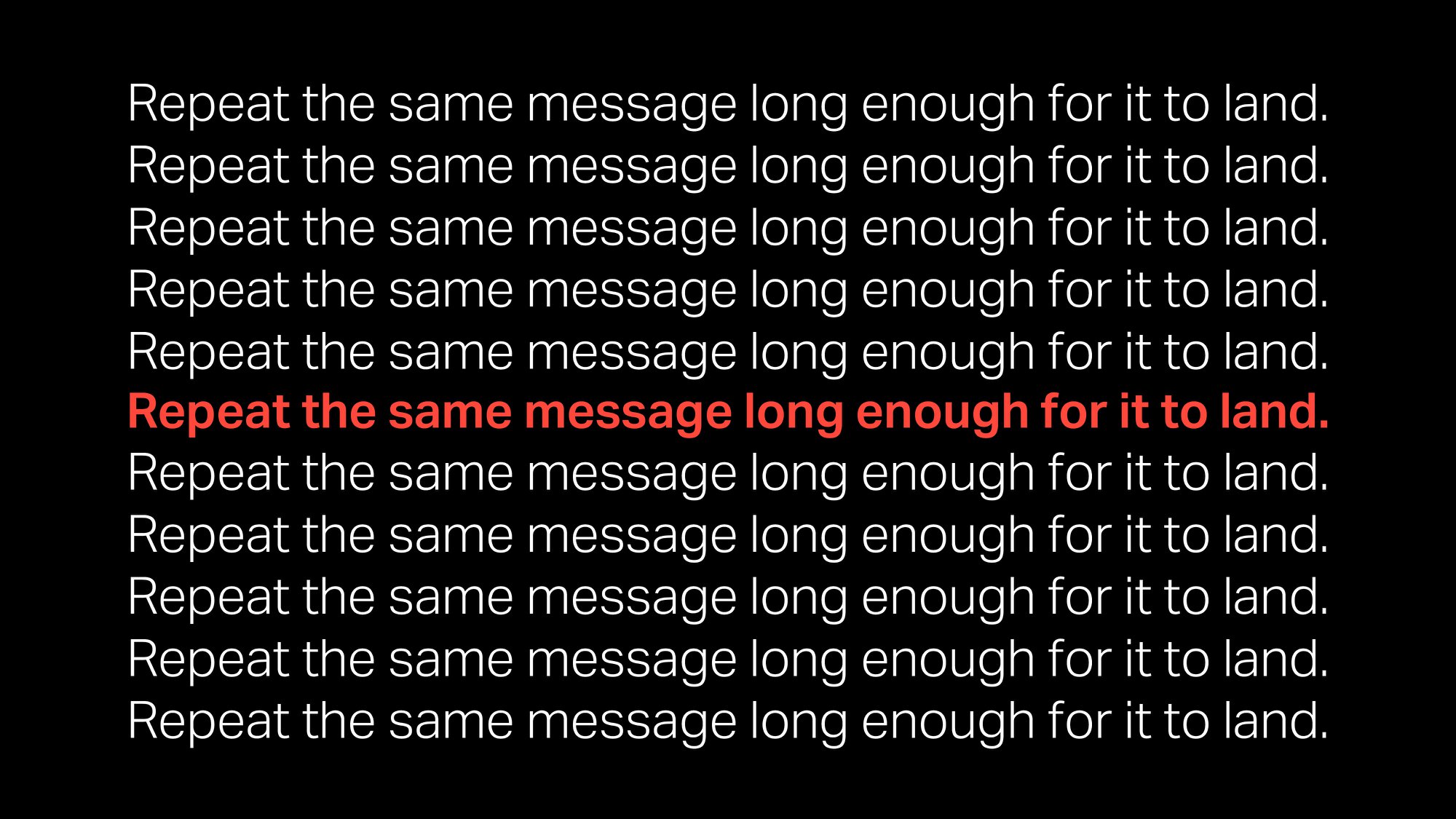
The businesses that grow sustainably don’t usually do more. They choose better, make fewer decisions, and make them deliberately. They repeat the same message long enough for it to land and resist the temptation to chase every opportunity or respond to every signal.
Quality over quantity, as noted in Forbes, is key. What looks like restraint from the outside is often the result of clarity on the inside. And clarity compounds.
The leadership challenge beneath the surface
Strategic focus requires saying no, sometimes to good ideas, familiar tactics, or work that feels productive but isn’t decisive. That kind of restraint can feel risky, particularly in environments that reward visibility and speed.
So instead, activity fills the gap. More output. More meetings. And more noise. And still, the underlying questions remain unanswered.
When “more marketing” actually works
There are times when increasing marketing activity is the right move.
When a business knows exactly who it is speaking to, what it stands for and why its message resonates, more marketing can accelerate progress. But without that foundation, activity is just movement.
Growth doesn’t come from doing more things. It comes from removing friction, in thinking, in messaging, and in decision-making.
A better starting question
The more useful question isn’t “What else should we do?”, it’s “What are we trying to be known for, and are our actions reinforcing it?”
Marketing comms don’t need to be louder. They need to be more intentional.
A note from us at theTeam
We’ve found that most businesses don’t lack ambition, ideas, or energy. What they lack is the space; and sometimes the permission, to think properly before acting.
Marketing communications work best when it’s built on clarity and choice, not pressure and momentum.
That’s where the real leverage sits.