What Rory Stewart taught us about leading through the “structural break” of 2026
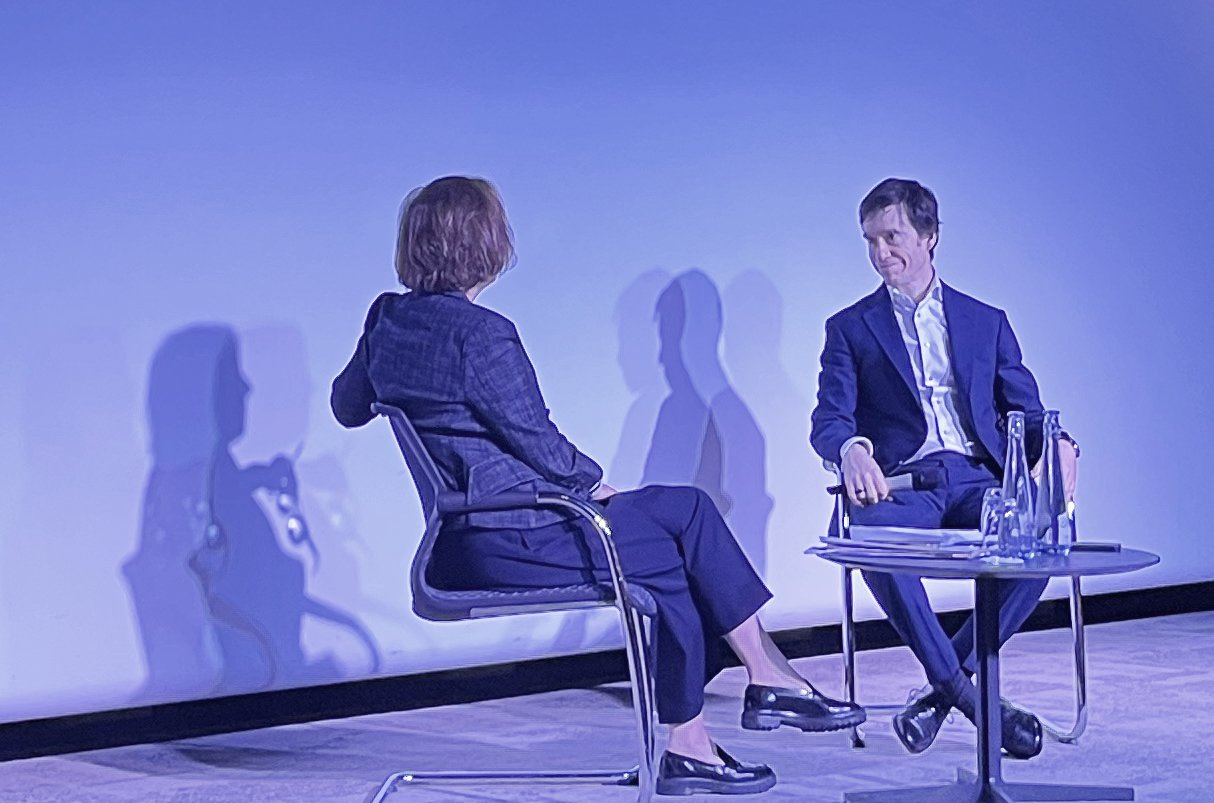
I spent my morning at a talk hosted by Kirsty Wark, listening to Rory Stewart break down the reality of 2026 – a reality increasingly shaped by geopolitics. If you’ve listened to The Rest is Politics, you know Rory doesn’t do "fluff." He delivers the kind of insightful, captivating realism that makes you want to immediately go back to your desk and rewrite your five-year plan.
Actually, scratch that. According to Rory, predicting the future is a delusion. We’ve entered what he calls a structural break. The old rules, the ones where we could rely on a stable US, a predictable global supply chain and a shared consensus of truth, have been shredded.
At The Team, we talk a lot about trust and employee experience. This morning confirmed one thing: in 2026, geopolitics is no longer "outside" your business. It’s at the very center of it. Here are the four themes we need to navigate together.
1. Politics: the "Denmark" dream vs. reality
We’re all trying to be Denmark, aren’t we? We’re chasing that high-trust, stable, social-cohesion vibe. But Rory’s warning was stark: the pillars of our equality, one person, one vote, the law being above the individual, are under attack.
Liberation requires leadership. But we can’t wait for a "unifier" to appear on the news. In your business, you are the leader. Your staff need you to relay confidence, even when the external world feels like it’s glitching.
2. Economics: mapping the exit from dependency
We’ve become over-dependent on the US! For AI, for defence, for our tech stacks. But the tide is turning and we need to look at our own foundations.
- The Big Remodel: We need a complete rethinking of our engineering capabilities and supply chains.
- The Opportunity: Don’t be paralysed. Remember, your competitors are facing the same disruptions. The risk is an opportunity if you’re the one who builds a resilient, independent path first.
3. International relations: Europe as our stability anchor
We’ve spent a lot of time looking across the Atlantic, but Rory’s "insider guide" points us back toward Europe. To find stability, we have to map our dependencies and systematically work our way out of them. This means getting closer to our neighbours.
In a world of electronic warfare and missile threats, isolation isn't an option. We need to find stability in a new European consensus.
4. Media & tech: the power of AI (and who holds the remote)
AI isn't just about "productivity hacks." It’s about power. Rory was clear: don't underestimate the countries that control these capabilities. We’re already seeing how AI can be used to manipulate the "big picture," making it harder for people to agree on basic facts.
The Strategy: Embrace AI, but keep your eyes wide open. Don’t let your business become just another "dependent" on a US-owned black box.
Where do we go from here?
Rory’s talk wasn't meant to be a downer! It was a call to action. We have to stop judging the world through the lens of the "last five years" and start looking at the structural shifts happening right now.
Our takeaways?
- Put geopolitics at the heart of your strategy. It’s not a "side" issue anymore.
- Focus on your people. When trust is broken globally, the trust within your company becomes your most valuable asset.
- Be a "Ruthless Disrupter" of your own status quo. If the rules have changed, stop playing by the old ones.
The world is changing, but as Rory reminded us: resilience is built, not found.