Navigating brand positioning in today’s UK housing market

The home is still where the heart is ..and the head is doing the sums
Housing sits at the centre of people’s lives. A home is more than bricks, mortar and boilers; it carries security, identity and a sense of the future. That emotional importance now sits alongside some of the toughest financial and regulatory conditions the sector has seen in decades.
In this blog I look at how a variety of businesses in the housing sector need to carefully consider their options. From the estate agents, to the house builders, and right through the repair and installation market, positioning your value is critical. It’s a busy but tight market.
Affordability is under strain as the cost of living rises and borrowing remains higher than many were used to in the last decade. At the same time, the market is softer, with more cautious demand and greater price sensitivity. Landlords and housing providers are managing rising spend on repairs and maintenance, driven by ageing stock, safety work, damp and mould, and decarbonisation targets. Expectations are changing as people become more digitally fluent and as energy performance, running costs and standards play a bigger role in decision making.
New regulation, including the Renters’ Rights Act and a stronger Decent Homes Standard, is reshaping how homes are let and managed. Rights, redress and quality are moving from optional enhancements to basic requirements. Across this landscape, clarity on what a brand stands for and how it delivers value has never mattered more.
With any acquisition, no matter how great it appears, questions will arise in the minds of customers. It’s when the risk of disruption is at its highest. That’s when a brand needs to be crystal clear on its value proposition.
When homeowners, prospective homeowners, landlords and renters weigh their options more carefully, value needs to come through clearly in both words and actions.
Clarity is commercial.
When the market moves, proof carries weight.
In settled conditions, people often lean on preference: who feels familiar, who seems to fit their lifestyle. In more changeable conditions, proof becomes more important: who can show better outcomes, lower risk and clearer value.
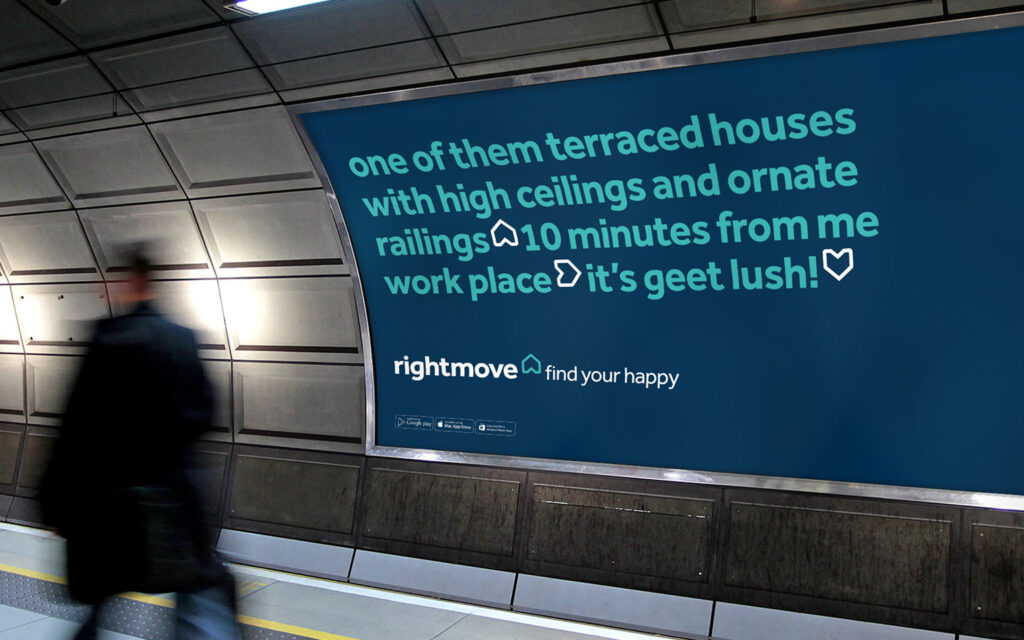
Our work with Rightmove illustrates this shift. The brand held a leading market position yet the experience felt different to estate agents and to people searching for a home. Visibility was strong but the story of value was less consistent. The response was a strategic recalibration around a single purpose, “Empowering the UK’s Property Decisions”, rooted in the idea that home sits at the centre of happiness.
For people looking for a home, that came through in the promise “Find Your Happy”, helping them feel confident and in control of their search. For agents, the focus was on reach, authority and commercial value. One brand, two carefully shaped value propositions, travelling clearly between audiences.
In a climate where homeowners, prospective homeowners, landlords and renters compare more, read reviews and look for evidence of performance, brands that demonstrate how they help people manage risk, cost and complexity gain an advantage over those that rely only on historic reputation.
Regulation, renters and a new understanding of value
The Renters’ Rights Act is reshaping the private rented sector. The end of no fault evictions, new rules on tenancy structures and greater emphasis on standards and redress create a new baseline for the relationships between landlords, letting agents and renters. Millions of people will feel the effects of these changes as new tenancies begin and existing agreements transition into the new framework.
In this context, brands that support landlords and renters can stand out when they show clearly how they help both sides navigate the new environment. That may mean:
- Making compliance simple and dependable so it becomes part of everyday practice rather than a source of anxiety
- Providing clear information about tenancies, notice periods and rights in language that is easy to understand
- Demonstrating strong performance on repairs and maintenance, with particular attention to safety, damp and mould, and energy efficiency
- Value increasingly rests on how well a brand helps people understand and manage the realities of the new system, not only on tone or familiarity.
Repairs, maintenance and installation: where trust is built
The softer housing market is about more than sales volumes and asking prices. The economics of maintaining homes that are safe, warm and compliant now sit at the heart of strategy. Spending on repairs and maintenance has climbed, driven by building safety work, energy efficiency upgrades and tighter regulation of conditions in both social and private homes.
For trades, merchants and manufacturers, this environment reshapes how value emerges:
- Installers are learning low carbon technologies, keeping up with accreditation and managing household risk on systems that still feel unfamiliar to many people
- Merchants are working under price pressure while maintaining strong service and reliable availability
- Manufacturers are moving from single products to complete solutions, with training, tools and support that give installers and households confidence

Our work with Wolseley responded to greater price sensitivity and declining first choice preference by positioning the business as “The Specialist Merchant”. The focus fell on clarifying the promise to customers, simplifying brand architecture and building that promise into the branch experience. The result was clearer value rather than louder claims. Heating brands such as Ideal Heating are taking a similar path, evolving from product makers to solutions partners so that installers and households feel supported through the low carbon transition.
In repairs, maintenance and installation, trust grows from how easy it is to get things done, how quickly issues are resolved and how safe people feel in their homes. Reducing friction provides a strong competitive edge.
Segmentation that starts with motivation
The housing landscape brings together homeowners, prospective homeowners, landlords, renters, housing associations, developers, trades and regulators. Each group experiences cost, regulatory and market pressures in its own way.
Our work with Gas Safe Register highlights the importance of behavioural segmentation. Research showed that many households hired engineers based on familiarity and recommendation, rarely checking registration. Awareness of the Register alone did not lead to safer behaviour. The strategy reframed the ask and encouraged people to check an engineer on the Register however they had first found them, whether through a neighbour, a search engine or a phone number on a van. This aligned with what people already did and turned awareness into action.

In today’s conditions, segmentation that looks at motivations and mindsets offers richer insight than broad demographic labels. For example:
- Stretched renters who prioritise security, predictable costs and prompt repairs
- First time buyers who trade location or space to gain a foothold and who scrutinise running costs and EPC ratings
- Landlords who weigh yield against compliance risk, reputational impact and long term asset condition
- Social housing providers who balance investment in existing homes with the need for new ones under closer regulatory attention
Understanding these different perspectives helps brands shape value propositions and experiences that are specific, practical and grounded in real decisions.
Keeping heritage and strengthening relevance
A strong history can reassure people making major decisions about homes. Heritage on its own rarely delivers growth when expectations, channels and regulation move on, so it works best when paired with contemporary relevance.
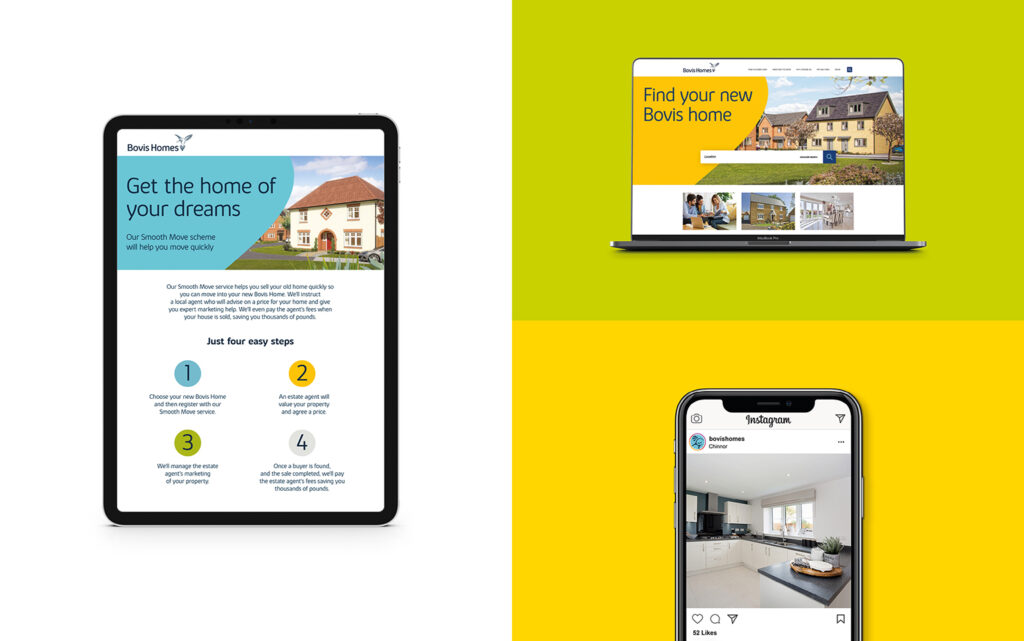
At Bovis Homes we showed how heritage and relevance support each other. The name carried recognition and a reputation built over decades. Modern buyers however are digitally fluent, socially aware and financially careful. They compare schemes online, look closely at energy performance and factor long term maintenance into their calculations. The repositioning presented Bovis as an “expert companion” for these buyers: confident, reassuring and contemporary. The hummingbird identity stayed, refreshed within a clear, digital first system.
The result was a brand that still felt familiar yet spoke more directly to the questions and priorities of today’s buyers.
Making transformation real
Times of change reveal where messages and reality do not match. Across Rightmove, Bovis Homes, Wolseley, Gas Safe Register and Ideal Heating, a consistent theme emerges: growth follows clarity that reaches all the way into operations.
Defining a value proposition sets a direction. Realising it across culture, operating model, brand architecture, service design and front line behaviour turns that direction into lived experience – that takes energy and expertise. That means aligning leadership intent with what homeowners, prospective homeowners, landlords and renters actually encounter when they search for a home, raise a repair, speak to an engineer or make a complaint.
When conditions become more dynamic, gaps between promise and experience appear quickly in reviews, social media posts and regulator feedback. Organisations across housing and the wider built environment see the pace of change, and those that translate their propositions into consistent experiences build trust and resilience.
Turning structural change into strategic advantage
Across the ecosystem, a sharper question is now in play:
What do homeowners, prospective homeowners, landlords and renters value about us today, in light of current prices, regulation and expectations?
For some organisations, the answer lies in bringing together B2B and B2C stories. For others, it lies in expressing long standing strengths in ways that feel relevant to modern digital behaviour. For many in heating, trade and social housing, it lies in redefining value in a low carbon, high scrutiny landscape where repairs performance, tenant voice and building safety are central.
This work reaches far beyond a new visual identity or a refreshed strapline. It centres on commercial clarity and consistent delivery.
The sector will continue to evolve as interest rates, inflation, government policy and investor sentiment develop. Brands that lead will use the current moment to refine and strengthen what they stand for, defining value propositions with discipline and realising them across every touchpoint, from first search to long term occupancy and maintenance.
That focus sits at the heart of our work.
At The Team, we partner with organisations across housing and the wider built environment at points of change. We help clarify what makes you valuable to the people who matter most and work with you to ensure that value runs through brand, experience and culture.
The home remains where the heart is and the numbers increasingly shape what is possible. In a changing market, growth belongs to brands that understand how people feel, what they face and how their needs are evolving, then design their value accordingly.
If you are working through change in housing, renting, repairs or the wider built environment, this will be the right time to define what your brand is truly worth now.
Contact me for a short discussion on this article or on the challenges you are facing.