The most underused tool in brand strategy? Your brand anniversary.
There is a moment every brand faces, usually more than once, that presents a golden opportunity for brand strategy that is so often missed. It arrives with fanfare and a clear deadline. And it comes with an audience already primed to pay attention, and a permission — earned over decades — to say something that matters. It is the anniversary milestone. And in our experience, many brands don’t fully capitalise on the strategic opportunity it offers.
This isn’t through lack of effort. The commemorative logo gets designed. The campaign gets briefed. The gala dinner gets booked. But the fundamental question — what does this milestone mean, and what should we say with it? — often goes unasked until it is too late to answer it properly.
An anniversary is the only moment in a brand's life when customers, employees, partners and stakeholders are already listening. The question is what you're going to say.
The strategic opportunity many brands miss
A milestone anniversary is, structurally, an extraordinary gift for brand strategy. It is one of the very rare occasions where a brand has a legitimate reason to occupy more space — in the press, in social feeds, in the minds of the people it serves. The public is not only willing to listen; they are actively curious. Former customers re-engage. Employees feel a renewed sense of pride. Stakeholders pay closer attention. Even competitors watch.
And yet the most common response to this gift is retrospective. A timeline of achievements. A heritage film. A message from the CEO about pride. Content that, however, warmly produced, is fundamentally about the brand looking backwards and looking at itself.
The brands that handle anniversaries well resist this. They understand that the milestone is not a finish line — it is a starting gun. The richest anniversary work we have seen and done uses the occasion to ask a harder question: not "look how far we've come," but "look at what we're going to do next."
Brand Strategy vs Nostalgia: The inside-out problem
One reason anniversary campaigns default to nostalgia is structural. The brief often originates in the marketing or communications team, where the institutional memory lives. The people who own the brief are, naturally, the people who know the history best. And so the work that emerges reflects their perspective: a carefully curated record of everything the organisation has achieved.
This is not wrong, exactly. But it is inside-out. It starts from the brand's point of view, rather than from the audiences. And audiences — customers especially — are not particularly interested in how proud a brand is of itself. They are interested in what the brand means to them, what it has given them, and what it promises to give them in the future.
The reframe is simple but significant: instead of asking "what have we achieved?" ask "what have we made possible?" The difference in the answers changes everything — the narrative, the creative, the emotional register, and ultimately the effect the activity to mark the milestone has on the people who experience it.
Case study: Heathrow 75th anniversary: Celebrating the past by looking to the future
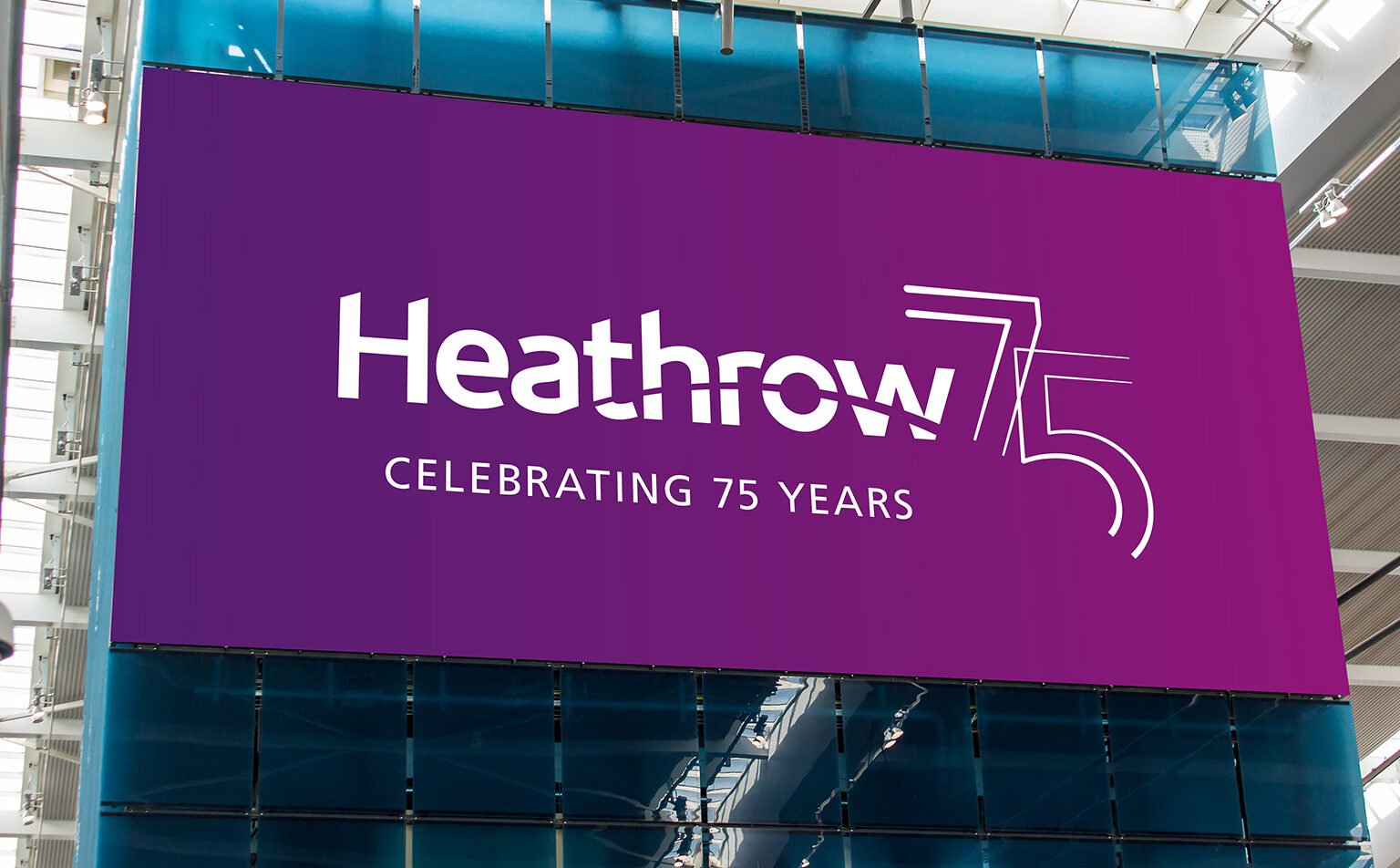
When Heathrow came to us to help mark their 75th anniversary, the brief was unusually complicated. It was 2021. Aviation had endured its worst crisis in living memory. The airport had operated at a fraction of its normal capacity for over a year. The mood in the industry was fragile.
A conventional anniversary campaign — one that looked back at 75 years of achievement — felt wrong for the moment. It risked being tone-deaf to the hardship that passengers, airlines, and airport staff had been through. More importantly, it missed what Heathrow needed: not a moment of self-reflection, but a moment of collective renewal.
Our strategy centred on a single insight: that progress is at the core of the Heathrow brand, and that the 75th anniversary was an opportunity to lean into that — to use the milestone to remind everyone what Heathrow enables. Connection. Adventure. Reunion. Possibility.
The campaign we built was built around four lines: more connections, more memories, more adventures, more time together. Each one was a promise — not about what Heathrow had done, but about what it would make possible again. The creative ran across terminal billboards, social media, and internal comms channels, creating a unified moment of pride and forward-looking energy.
When to start thinking about it

This is the question we hear most often, and the answer is almost always: the earlier the better.
A brand milestone handled well is not a single campaign — it is a sustained programme that may span months, beginning with strategic work and culminating in a moment (or a series of moments) that marks the anniversary itself. The strategy informs the identity. The identity informs the campaign. The campaign needs time to be made properly. And all this needs to be briefed, approved, produced, and deployed.
The brands that start thinking about their anniversary months in advance are the ones who end up with the most interesting work. They have time to ask the hard questions. They have time to do the research — with customers, employees, alumni, partners — that turns a communications programme into something that genuinely reflects the brand. And they have time to build something creative that is worthy of the milestone, rather than something that just meets the deadline.
What an ambitious anniversary programme looks like
The surface of marking an anniversary — the marque, the creative, the campaign, the experiences — is just that: a surface. Beneath it should be a body of strategic work that gives the creative its meaning and direction.
The key questions to ask:
01. Who are we now? Has the brand kept pace with the world it operates in? An anniversary is rare permission to ask the hardest strategic question: do our values, voice, and visual identity still reflect who we are?
02. How do we mark it? The best anniversary campaigns are not self-congratulatory. They celebrate what the brand does for other people — the connections it enables, the problems it solves, the lives it touches. That's a very different brief.
03. What comes next? The most powerful anniversary programmes use the milestone to set direction — to signal, publicly and internally, that the brand knows where it's going. The milestone becomes a pivot point, not a photo album.
How to bring it to life:
Brand strategy and narrative. What is the story the anniversary tells? What chapter of the brand's provenance does this milestone conclude, and what chapter does it begin? This is the foundation on which everything else is built.
Identity and marque design. A well-designed anniversary mark does more than commemorate. It signals — to the market, to employees, to partners — that the brand is taking its milestone seriously. It becomes a visual anchor for the entire programme.
Employee engagement. The people inside the organisation are the brand's most credible advocates. An anniversary programme that doesn't galvanise them first is missing its most powerful channel. Done well, internal engagement turns employees into active participants in the anniversary story — not just recipients of it.
Campaign and content. The outward-facing creative expression of the anniversary strategy, spanning whatever channels are right for the brand: advertising, social, experiential, press, events.
Corporate communications. For many organisations, the anniversary is a legitimate platform for investor, stakeholder, and partner communications — a chance to situate the brand's history within a broader story of value creation and future ambition.

Common pitfalls to avoid
Starting too late. When the brief arrives weeks before the milestone year, the work will be rushed, the strategy will be thin, and the result will feel like it. Ideally, start months out.
Defaulting to nostalgia. Provenance is important, it shows resilience. But looking forward takes courage and a clear point of view about where the brand is headed. The work that endures is always the latter.
Treating the anniversary as a design brief. A logo does not make a milestone programme. The design is the expression of a strategy. If the strategy isn't there, no amount of great design will compensate for it.
Forgetting your people. Employee engagement is not a secondary consideration. In our experience, it is often the most powerful output of a well-run anniversary programme — and the one most likely to create lasting cultural change.
Our Heathrow case study, as well as our anniversary work with Redstar and Allianz, shows what's possible when a brand is willing to use its milestone to say something meaningful. The coming years are full of significant milestones across many sectors. And the brands that use those moments well will find that an anniversary is one of the most cost-effective brand investments they can make — because the audience is already paying attention.
Starting the conversation
An anniversary provides the platform for a significant strategic opportunity, not just a number to celebrate. So, if your brand has a milestone approaching in the next year (or even year after), now is the right time to begin thinking about what it could mean. Not to brief a campaign — but to ask the strategic question that sits underneath every great anniversary programme: what do we want to say, and why does it matter?
We are happy to have that conversation with you at whatever stage of thinking you are at. Sometimes the most useful first step is not a brief but a question.
To talk about your brand's next milestone, contact us today.